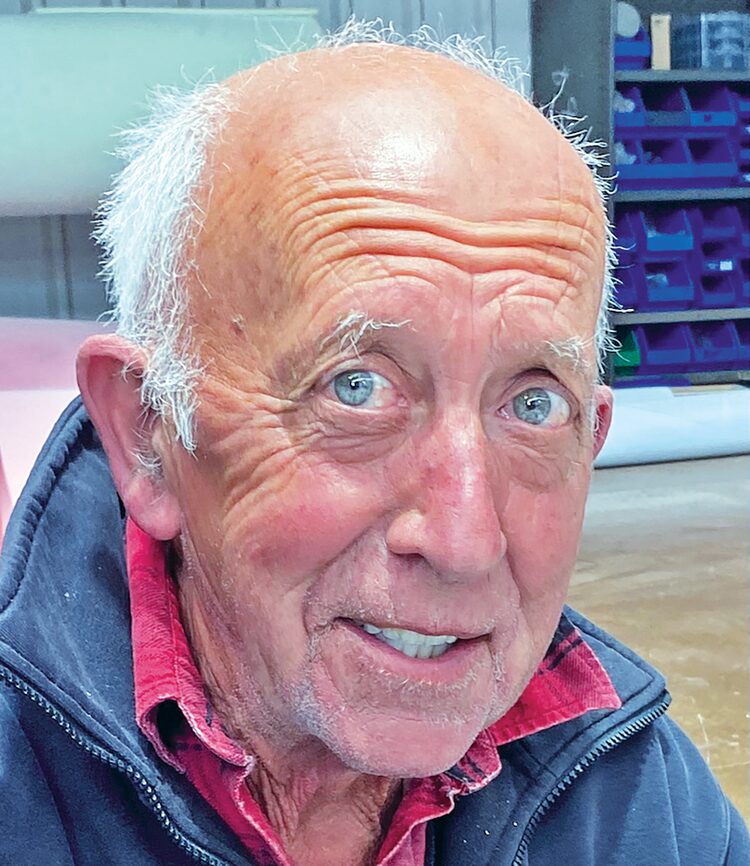
After nearly 30 years working as a cancer nurse, Bairnsdale local Kay Stephenson thought she understood the cancer experience better than most.
But when she was diagnosed with breast cancer in 2006, she quickly discovered that professional knowledge did not make her immune to the stress, fear and uncertainty that can follow a diagnosis.
Having regularly recommended Cancer Council Victoria as part of her work, Kay called the organisation’s free and confidential 13 11 20 information and support line. Through that conversation, she was referred to Cancer Council Victoria’s Peer Connect program, which matches people with a cancer diagnosis with trained volunteers who have gone through a similar experience.
Kay was soon connected with another mother living in rural Victoria who had experienced breast cancer herself, and says the phone call they shared became a key turning point in her journey.
“I thought if she can do it, I can do it.
I’m going to be OK,” Kay said.
“It was only one phone call, but it was enough to get me through and get me on the right track.”
Cancer Council Victoria is encouraging people across Gippsland who are affected by cancer to reach out for support, with programs like Peer Connect offering the opportunity to speak with someone who understands the challenges of diagnosis, treatment, and recovery.
The program is available through the 13 11 20 information line, which connects anyone affected by cancer with qualified professionals who can provide emotional support, practical information, financial guidance, and referrals to local services.
Kay says despite decades of experience in cancer care, nothing prepared her for hearing the words that she had cancer.
“You flounder to make decisions,” she said.
“For the average patient, they can’t take information in. Even I couldn’t take it in, and I was quite familiar with the stuff.”
One of the most important lessons she learned was the value of having support throughout her cancer journey.
“It doesn’t matter who you are. Take someone with you to your appointments,” Kay said.
“You just don’t hear stuff.”
Nearly two decades later, Kay faced another major challenge when she was diagnosed with Stage 4 follicular lymphoma in 2025.
By then she had retired from cancer nursing and was working on a palliative care project across Gippsland.
Yet despite her professional background and previous cancer experience, the diagnosis again brought uncertainty and disruption.
“We just had to put life on hold,” she said.
“I didn’t have the headspace, and my husband didn’t either because he was really worried about me.”
Accessing treatment has meant regular trips from Gippsland to Melbourne for chemo-immunotherapy, adding financial and practical pressures to an already difficult time.
Her experience has reinforced her belief that support services are just as important as medical treatment.
“If you support the person, the disease will be OK, but if the person is not supported, life’s tough,” she said.
Today, Kay continues travelling to Melbourne every eight weeks for targeted therapy and remains passionate about helping others find support early in their cancer journey.
She believes one of the biggest challenges people face is knowing where to start and what questions to ask.
“Most people don’t have a strong health literacy,” Kay said.
“They don’t know what they don’t know, so they don’t know what to ask.”
That’s why her advice to anyone diagnosed with cancer, or supporting someone through cancer, is simple: reach out.
“I tell them to ring the Cancer Council. I feel like the Cancer Council’s people know that to take those calls they’re really able to put people onto the right path of where they can get help.”
Cancer Council Victoria’s free and confidential 13 11 20 information and support line is open to anyone seeking practical and emotional support or trusted information.